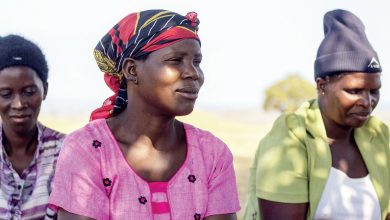
A farmer who buys a tractor on credit tends to guard it carefully. The machine tills his land, generates income and provides a clear incentive to repay the loan used to buy it.
But a farmer who receives fertiliser on credit, especially when it arrives through a government programme, may treat it differently. Once he harvests the crop, the obligation to repay can fade into the background.

home a bag of fertiliser. | Nation
The contrast captures a growing debate about Malawi’s State-backed lending institutions: whether they are expanding financial access for the poor or drifting into politically-exposed subsidy
Loan recovery data from three government-linked lenders suggest sharply different outcomes depending on how the programmes are designed.
An analysis of the Malawi Enterprise Development Fund (Medf), the Export Development Fund (EDF) and the Malawi Agricultural and Industrial Investment Corporation (Maiic) shows stark differences in performance.
Medf, formerly the National Economic Empowerment Fund (Neef), recovers roughly 48 to 52 percent of the loans it disburses, while EDF records recovery rates of about 85 percent.
The disparity highlights a broader issue confronting Malawi’s development finance architecture: whether State-backed credit schemes can balance social objectives with financial discipline. Analysts say the answer often depends less on government ownership than on how lending institutions are structured and insulated from political pressure.
Governance experts Wi l ly Kambwandira and Jimmy Lipunga said in separate interviews this week that the contrasting recovery rates suggest political exposure may be a key driver of loan defaults in State-run institutions.
Developments at Maiic, where government shareholding was capped at 20 percent to guard against political exposure, underline this difference. Loans issued for capital equipment and long-term investment recover about 94 percent.
But seasonal agricultural input loans, largely financed by Maiic itself, or other government agencies, recover only 37 to 44 percent.
The figures have reopened a policy debate about whether government-run credit schemes are effectively supporting underserved entrepreneurs or struggling under the weight of political and institutional pressures.
Why State lending exists
State-backed lending institutions were originally designed to address a structural gap in Malawi’s financial system. Large segments of the population, particularly rural households, smallholder farmers and microentrepreneurs, remain outside formal banking because commercial lenders often consider them too risky to finance.
According to the 2023 FinScope Survey, only 29.1 percent of adult Malawians had access to formal financial services. About 34.6 percent had access to formal and semi-formal services,
while 46.1 percent had access to all financial services, including informal channels.
About 22 percent had no access to financial services of any kind.
The study further showed that approximately 17.7 percent of households successfully obtained a loan from formal financial institutions, even though 24.6 percent had requested credit within that year, highlighting the constraints households face when attempting to access financing.
Yet analysts say the effectiveness of programmes designed to improve financial inclusion and access to credit depends heavily on how they are designed and governed.
Scotland-based Malawian economist Velli Nyirongo says political interference can undermine the financial discipline needed for sustainable lending programmes.
“When lending decisions are influenced by political priorities rather than commercial discipline, loans are sometimes given to borrowers who lack the capacity or intention to repay,” he said.
Government credit can also be perceived differently from private loans.
“In many cases, borrowers see these loans as a form of public assistance rather than a financial obligation,” Nyirongo said.
When credit outpaces capacity
The contrasting recovery rates also reflect differences in institutional design.
Documents reviewed as part of this investigation show that under Maiic’s Mega Farms programme, the institution advanced about K48.9 billion worth of agricultural inputs despite having roughly K14.16 billion in available liquidity. The mismatch later translated into supplier arrears estimated at about K33 billion.
While Maiic’s investment loans, linked to machinery and other productive assets, show strong recovery performance, seasonal input loans appear far more vulnerable to repayment delays.
Questions over who receives the loans
Another unresolved question is who ultimately receives empowerment loans.
Detailed public data showing how Medf’s loan portfolio is distributed across households, microenterprises and larger businesses is not routinely disclosed.
But a list of alleged defaulters that Minister of Agriculture, Irrigation, and Water Development Minister of Agriculture, Irrigation, and Water Development Roza Fatch Mbilizi presented before Parliament last month showed prominent politicians, including former ministers Khumbize Kandodo Chaponda, Ezekiel Ching’oma and Jean Sendeza alongside her husband Justin Likhunya, Ulemu Chilapondwa, the late first deputy Speaker of Parliament Madalitso Kazombo and former president Lazarus Chakwera’s daughter, Rudo, show how politically-connected people appear to have preferential access to such loan schemes.
Kambwandira, also the executive director of the Centre for Social Accountability and Transparency, says political influence can distort programmes intended to support productive investment.
“When lending decisions are influenced by political pressure rather than sound risk assessment, default rates inevitably rise and taxpayers ultimately absorb the losses,” he said.
In such circumstances, he warned, credit programmes risk becoming “cycles of subsidy rather than engines of economic empowerment”.
Lessons from lending schemes
Malawi has faced similar challenges before.
In the early years of multiparty democracy, institutions such as the Small Enterprise Development Organisation of Malawi (Sedom) and the Development of Malawian Enterprises Trust (Demat) were created to expand credit access for indigenous entrepreneurs.
But both organisations struggled with limited institutional capacity and governance weaknesses. Demat, for example, was tasked with distributing loans under poverty alleviation programmes despite having little experience in managing lending operations.
Analysts say political interference weakened repayment discipline and some borrowers began treating government loans as handouts rather than repayable credit. By the early 2000s, Sedom and Demat had largely lost relevance as sustainable lenders.
Malawi’s history of State-linked financial institutions shows a recurring cycle of weak loan recovery and restructuring. The Malawi Savings Bank (MSB) accumulated more than K6 billion in toxic loans tied to politically-connected borrowers and was eventually sold to FDH Bank in 2015 after failing to meet Basel II capital standards, with government retaining the bad debts through a debt collection company.
Earlier lending schemes such as the Malawi Rural Development Fund and the Youth Enterprise Development Fund left behind roughly K8.9 billion in unrecoverable loans before being absorbed into later empowerment funds, while the original New Building Society model was ultimately converted into NBS Bank plc after failing to meet modern capital and competitiveness requirements.
Politics versus financial discipline
For some economists, the deeper challenge lies in the tension between political objectives and financial discipline.
Mzuzu University economics lecturer Christopher Mbukwa argues that borrowers sometimes view government loans as political rewards.
“The borrowers feel entitled that they are being compensated for supporting a particular regime,” he said.
When that perception takes hold, Mbukwa said, it becomes difficult for State-backed lending institutions to operate as financially-sustainable businesses.
Lipunga believes government still has a role in development finance but says the institutions must be designed differently.
“A development bank leverages lower costs of capital and a higher risk appetite to invest in areas beyond the reach of conventional commercial banks,” he said.
However, he cautioned that such institutions must operate independently from political interference.
“If political considerations dominate the recruitment of boards and management, that culture cascades into lending decisions,” Lipunga said.
Searching for alternative models
The repeated struggles of State-run lending programmes have also prompted debate about alternative models for expanding financial access.
Studies and World Bank data show that Village Savings and Loan Associations (VSLAs) have become one of the most widespread sources of credit in rural Malawi. These community savings groups allow members, often women and smallholder farmers, to pool funds and provide small loans to one another.
While they expand financial access in remote areas, their loans are typically small and short-term, limiting their ability to finance business expansion.
Another emerging approach is the World Bank-supported Financial Inclusion and Entrepreneurship Scaling (FInES) project, which channels funding through financial institutions rather than direct State lending.
Mbukwa said the FInES project demonstrates how this model works because commercial banks apply credit and risk assessment mechanisms that automatically filter out borrowers seeking loans through political patronage.
The policy challenge
For policymakers, the debate may not be whether Malawi should support access to credit for underserved entrepreneurs.
The deeper question is whether public lending institutions can maintain the financial discipline required to survive—or whether Malawi will continue repeating a cycle in which well-intentioned credit schemes drift into political patronage and financial distress.